

Welcome to the "Terra delle Gravine" educational botanical garden. On this tour, immerse yourself in the natural beauty of this unique area, rich in history.
Before beginning this journey, it's important to explain how the ravines that give the Regional Park, established in 2005, are formed.
Meteoric waters, which tended to reach the sea, created streams that entered pre-existing fractures in limestone blocks or depressions created by ancient tectonic and karst phenomena. The action of these streams led to the formation of increasingly deeper incisions in the calcarenite, giving rise to the ravines and lame (gravines). Both are karst-tectonic incisions, but they differ in that the ravines are large incisions, carved deeper than they are wide, whereas the lame (gravines) appear to be carved wider than they are deep.
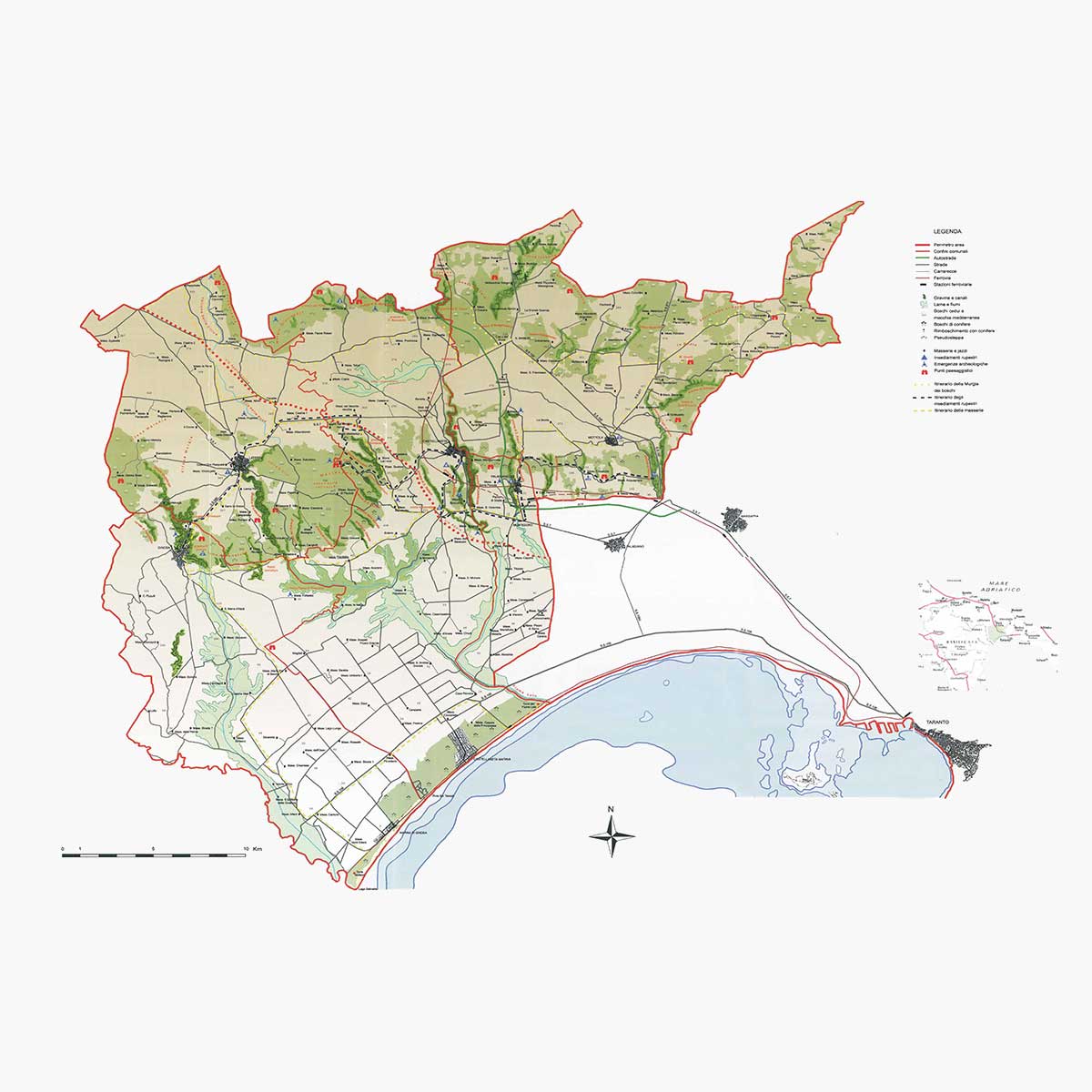
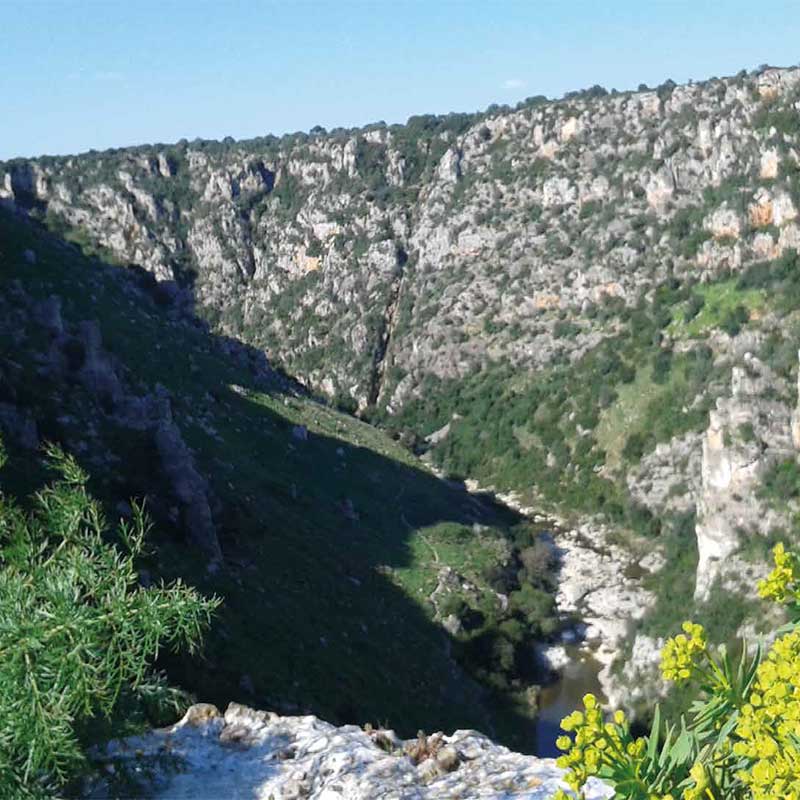
Your current location falls within what we might call the Murgia delle Gravine, which corresponds to the southeastern portion of the Murge plateau. This area is characterized by the presence of deep karst incisions known as ravines. The current plant landscape is the result of over two thousand years of human activity. Only a few signs of the original natural heritage remain today, but they still provide a glimpse of the ancient landscape.
The landscape changes as we descend from the Murgia toward the coast. We can distinguish three zones:
"SUB-MEDITERRANEAN HORIZON" zone (300–450 m)
This area includes a territory characterized by the presence of large ravines and interesting rock formations. The proximity of the ravine cliffs and the presence of large trees (including the oak) make this area a haven for large soaring birds: vultures, buzzards, kites, and falcons. The highest part of the territory, the Murgia proper, is occupied by vast steppe areas used for grazing.
"SUB-MEDITERRANEAN HORIZON" zone (150–300 m)
This area includes the territory of the Murgia ridge, where Mediterranean scrub is found, featuring vegetation characterized by numerous evergreen species, as well as Aleppo pines and holm oaks.
"SUB-COASTAL HORIZON" BAND (0 TO 50 m)
Dune vegetation is followed by an Aleppo pine forest, which becomes increasingly dense as one moves away from the coast. The waterways are lined with reed beds.
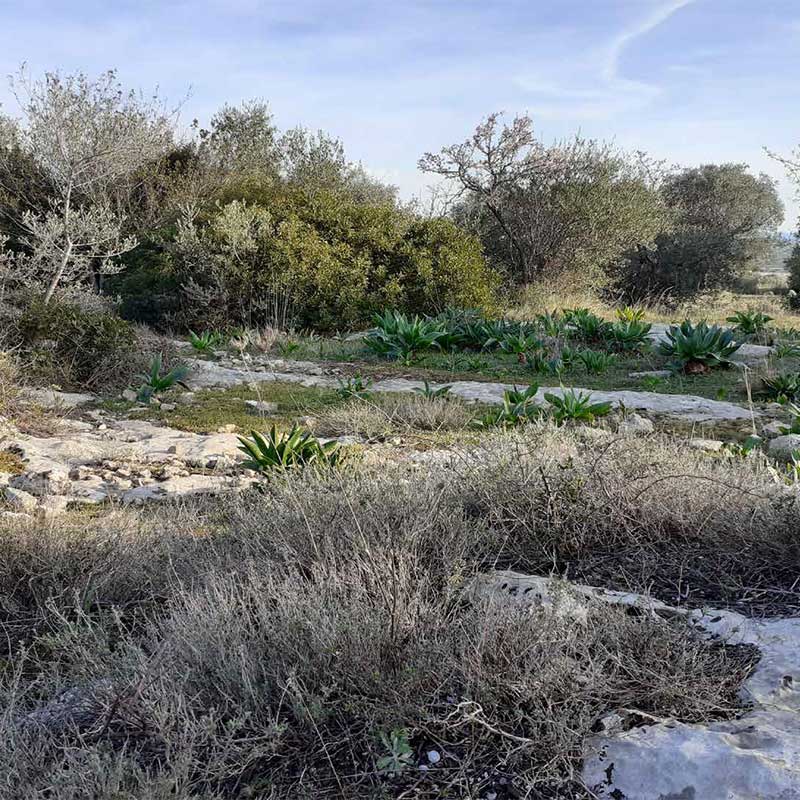
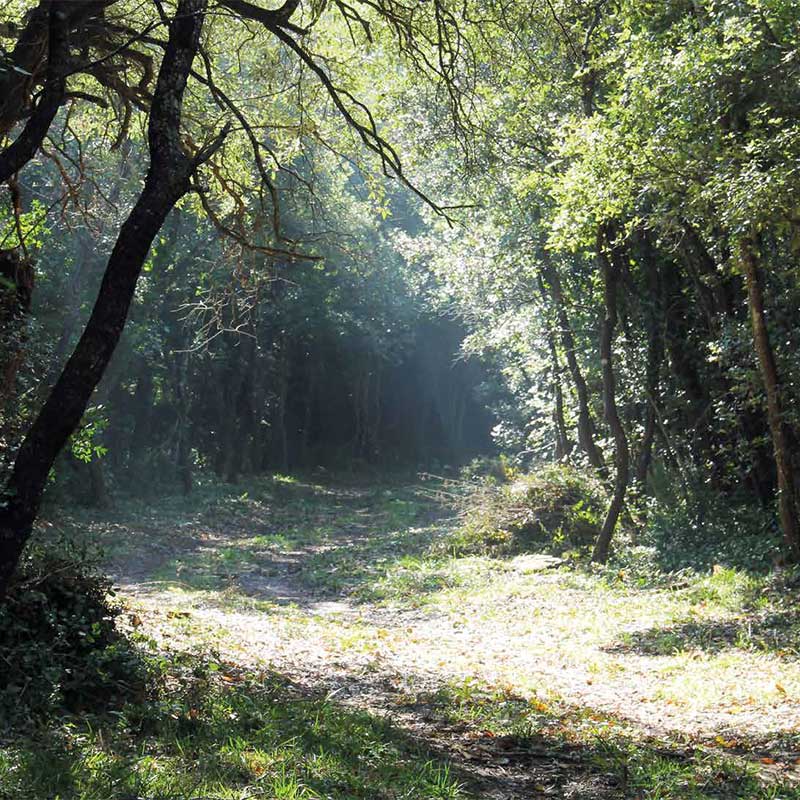
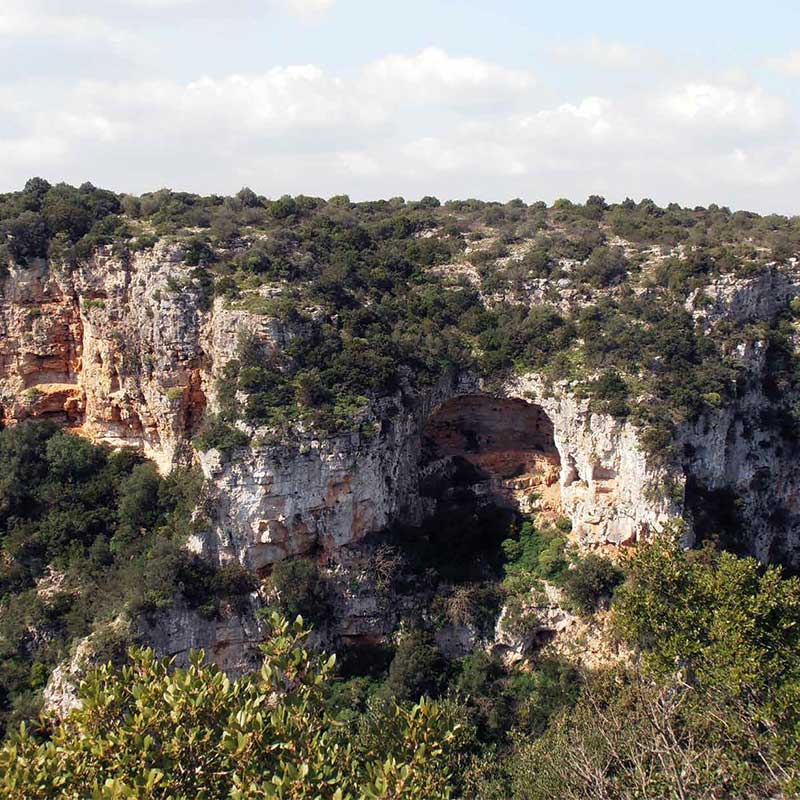
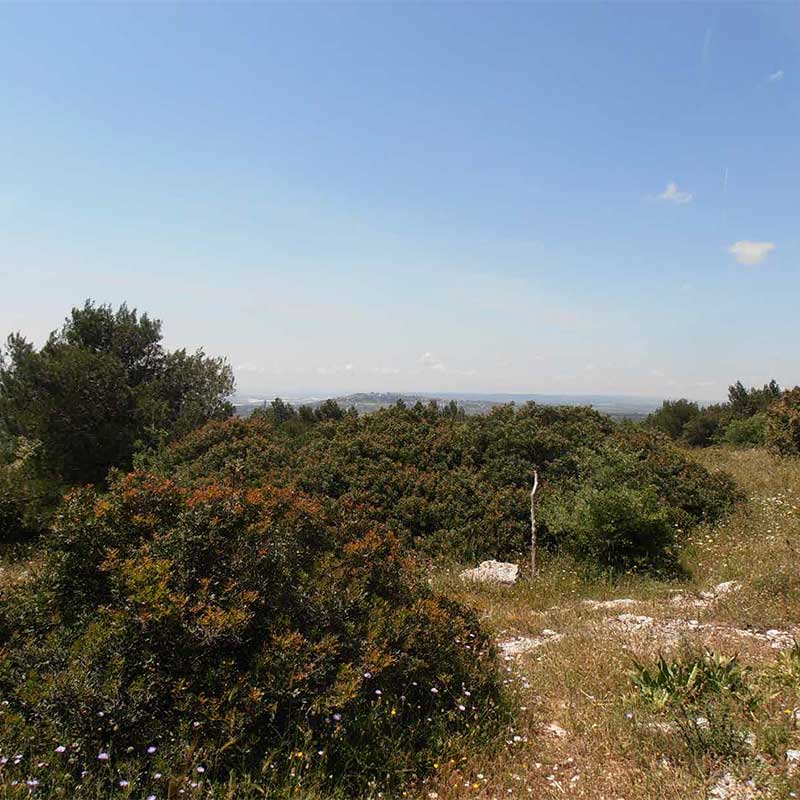
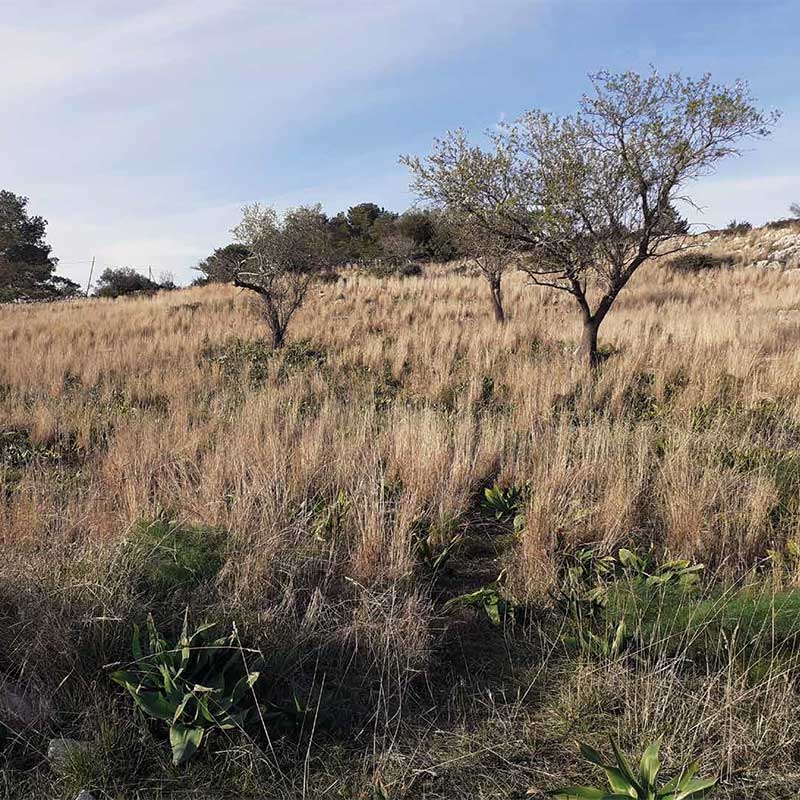
To the natural diversity of Mediterranean flora, we must also add the influence of humans, who have interacted with the natural vegetation for centuries. Thus, over the centuries, new species have been added to the original 20,000, undoubtedly enriching the variety of the initial vegetation but, in part, distorting its original characteristics. In reality, human intervention has not been limited to the introduction of new species; human activities have also contributed to modifying the original appearance of Mediterranean landscapes. Intensive grazing, fires, and deforestation for the cultivation of new lands have led to the impoverishment of the original plant formations, which appear degraded and far from that state of equilibrium known as the climax, which in our case corresponds to the evergreen forest.
Hence the need to promote, enhance, and protect this immense territory, including through this project funded by the Puglia Region (resources from the ESF OP Puglia 2014-2020 Action 8 4 and the Development and Cohesion Fund).
The botanical garden-itinerary, therefore, aims to be a simplified representation of the ecosystems, as they are visible in nature, present in the "Terra delle Gravine" Regional Park. We found it interesting, as a didactic and educational tool, to depict the degradation of primeval forests by humans into new vegetation systems. These systems have been reproduced in the botanical garden in five different ecosystems, representative of Mediterranean vegetation.